Cryptocurrency explained: Is it the future of money beyond politics?
JM: I think it is a fair comment to say that cryptocurrency is the most hyped asset class in the world and also perhaps the most misunderstood. The very warmest of welcomes to The More You Know from STANLIB Asset Management. I'm Jeremy Maggs and in this episode I want to take a clear-eyed look at cryptocurrency. Just a passing fad? I don't think so. Or the early signals of a financial system undergoing radical change? I think that is probably a whole lot more accurate
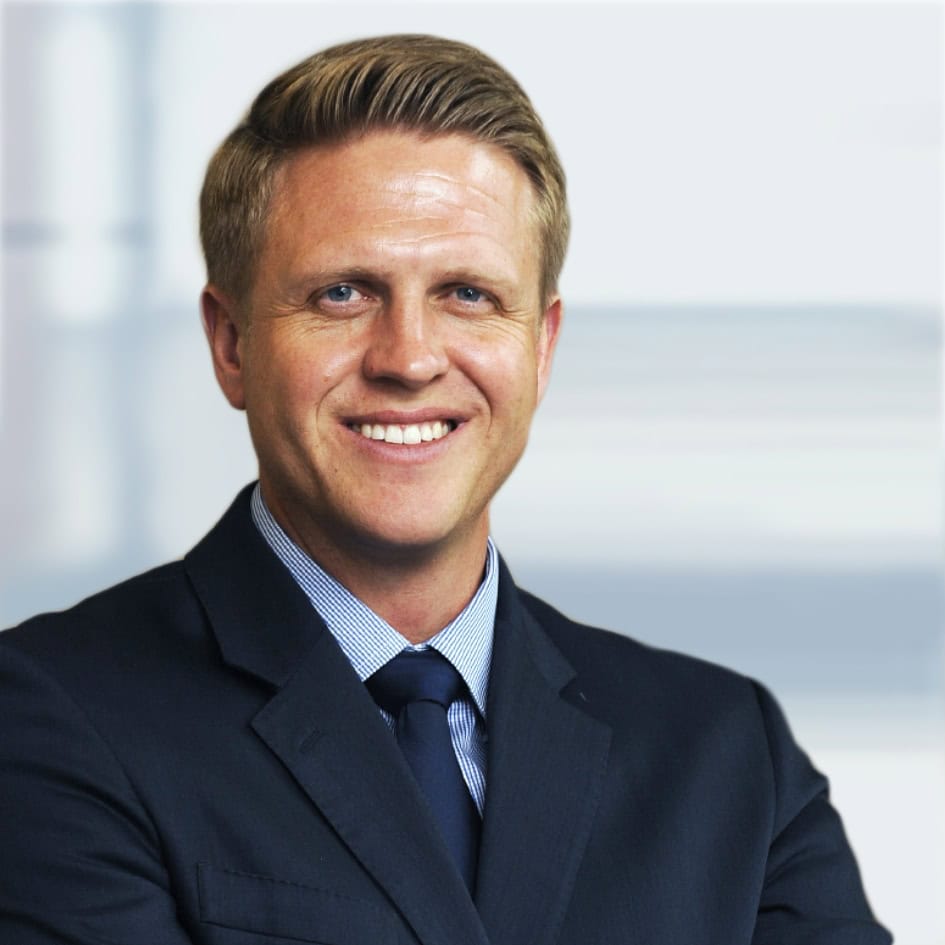
My guest today is Rademeyer Vermaak, a keen observer of the crypto space. While STANLIB doesn't currently invest in cryptocurrencies, they would have to be watching this space and all the developments very, very closely, from blockchain breakthroughs right through to regulatory shake-ups.
This is not about crypto evangelism. It's about understanding the trend. I want to try in this conversation to separate some fact from the fiction and maybe what it broadly means for the future of finance. Rademeyer, a very warm welcome back to the programme.
This is a very interesting conversation and I'm going to start off maybe just the starting point, the jump-off point here. Not everyone has either an understanding of what cryptocurrency is or everyone has a different definition. Give us your best version.
RV: Hi, first of all, I think a couple of stats maybe, a couple of really interesting data points that will help frame the conversation around why crypto is such a hyped asset class. I got these numbers from the Federal Reserve website and from Bloomberg (editor’s note: data as of November 2025).The first stat is the following: 80% of all US dollars ever created were created in the last five years - the hard currency, in other words. Let's use the words “hard currency” for now, but we'll explore that narrative.
The second point is that Bitcoin is the best-performing asset of all time. The Bitcoin price on Bloomberg goes back to 2010. Since then, Bitcoin has generated a return of, hang on to your seat, 198 404 400%.That is 162% per year. Flipping that on its head, it means that the US dollar has lost 99.5% of its value against Bitcoin since 2010.
And the third thing I want to just say to frame the conversation is that, in the very first block in the blockchain, I mean we've all heard of this blockchain and I'll go into what the blockchain is shortly and what the digital currency is and all of that, but the very first blockchain of the OG cryptocurrency which is Bitcoin, the very first block contained the following text. It's a quote from the Financial Times and it says:“ the Chancellor of the Exchequer is on the brink of a second bailout for the banks”. That really captures the essence of why Bitcoin as the OG cryptocurrency was invented and from there this whole industry has blossomed into a multitude of different cryptocurrencies with different functions and different forms which we can also explore a little bit in the conversation.
JM: Maybe I should ask you then, what intrigues you or what fascinates you most about this technology?
RV: The really fascinating thing about the technology of blockchain is that it is the first time in history that we can have digital scarcity. Let me put that into a bit of context for you. Never before was it possible to have something that is digital and unique.
Think about if you take a picture on your phone, the moment you WhatsApp it to someone there are two copies of the picture. The first person would have to delete the picture from their phone literally for there to be a uniqueness to that picture. That is really what the blockchain achieves. It achieves for the first time this concept of digital scarcity and it does this through a distributed ledger technology. What that really means, it's really quite simple, is that there are hundreds of computers out there, actually hundreds of thousands of computers out there, that all agree that the only true copy of the picture is on your phone. As long as there's consensus amongst everyone, then that is the truth and only you have control over that picture.
JM: Why is this advantageous to investors?
RV: I guess that the application of this digital scarcity then gets applied to money. If you think about the fundamental principle of economics, scarcity is what creates value. That's why gold is worth more than sand, because gold is scarcer than sand.
To really understand why Bitcoin as an application of blockchain is so important, you have to understand a bit about the history of money. Let's talk a little bit about how money has evolved through time. If you think back thousands of years, there's a very important story about what Africans used as currency. They used these little beads, African beads, to trade among each other. The beauty of the beads was that they helped facilitate trade. You didn't have to trade two cows for one bull, whatever the specific needs were at the time. You could trade the cows for beads and then use the beads to buy food etc. Then Europeans came to Africa and they saw how valuable these beads were and how much you could purchase with them. They went back to Europe, created these beads very cheaply, came back to Africa with boatloads of them and basically decimated the African economy.
There were lots of different ways, lots of different things that were used as money through time. But through the durability and the portability of it, eventually the world settled on the gold standard. From pre-Roman times, gold became the default monetary unit. Because it's difficult to carry around, banks and central banks were developed. They said give me your gold, I'll store it for you and I'll give you a piece of paper that says this piece of paper entitles you to one ounce of gold. Then you could go out in the street and trade the piece of paper instead of the physical gold. So money was always tightly tied to gold. There was a one-to-one relationship between the piece of paper and the gold in the bank.
In 1971, US President Richard Nixon broke that relationship. He basically said the US dollar can no longer be converted to gold. That resulted in what we call fiat currency, and all currencies today are fiat currencies. Fiat means by decree. It is a statement.
There's no intrinsic connection to any underlying physical gold. What fiat money unfortunately did is the same thing that Europeans did with the beads. It allowed governments to create more and more. The effect of that, which we feel in our everyday lives, is inflation. That's why everything is getting more and more expensive, because of the ability of Europeans to create beads and of central banks and governments to create more money. That's why, just to close the loop, Bitcoin is such an innovative and important invention. It is the hardest currency ever created. There's no possibility to create more than what is already coded. Notwithstanding the very eloquent argument, it is still viewed, often by the uninitiated, as something that is very volatile.
JM: There's no doubt about that. How do you create that balance between, or find the balance between, the uniqueness on the one hand and the volatility on the other, which I think could be off putting to people?
RV: Oh, absolutely. You should never buy into Bitcoin or any cryptocurrency until you've done your own research and you understand what it is that you're buying into. That actually counts for any investment that you make. The reality is that, even as, I'm going to refer back to the dot-com period, as the internet came into being, there were lots of dot-com stocks and it was a very volatile period. You see this sort of volatility every time a new technology goes through the S-curve of adoption.
Look, it could very well be that Bitcoin goes to zero. It could be that it doesn't pan out as the original inventors and as the market perceives it. But not based on those current returns that you were talking about earlier. I'd say either Bitcoin goes to zero or it goes to a million or more. That's what the market is about. That's why there is volatility.
But there's more to the crypto market than just Bitcoin. I think Bitcoin is the OG first crypto asset. But since then there's been a massive explosion of other very useful components in this cryptocurrency ecosystem.
I'm going to touch on a couple of them. The US government has made a 180 degree U-turn in terms of their stance towards cryptocurrencies. President Trump actually signed the GENIUS Act into law on the 18th of July. The GENIUS Act acronym stands for Guiding and Establishing a National Innovation for US Stable coins. This act is a regulatory framework for stable coins.
Let's talk about what stable coins are. They run on the same blockchain technology but they've got a different application to Bitcoin. Stable coins are basically a one-to-one mapping to US dollars. The theory behind a stable coin is that you go to a crypto provider - there are two main ones, Tether and USDC - you give them physical US dollars and they give you this cryptocurrency in return. There's a one-to-one link between the two. Once you've got this stable coin in crypto format, you can then send it to anyone you want for immediate settlement.
There's a number of different benefits that come from having your dollars in a stable coin. The US is really taking the front foot on this. They really want to capture the innovation behind that. Importantly, what this stable coin adoption in the US does is to create a demand for US Treasuries in a time when the rest of the world is sort of shunning US Treasuries. USD Tether, one of the stable coins, is one of the top ten holders of US Treasuries in the world at the moment.
JM: Stable coins, that's what they do. Alright, so if the US is on the front foot, what about South Africa? I want to bring the conversation back to this particular market. You're listening to The More You Know, today's episode exploring the brave and exciting new world of crypto. I'm with STANLIB's Rademeyer Vermaak, who is helping us separate signal from speculation. It is a fascinating conversation. So what about South Africa?
RV: In South Africa, we cannot buy into any cryptocurrencies, according to Regulation 28, as a Collective Investment Scheme. Financial advisers can advise their clients to buy crypto if they are adequately regulated. If you have to ask me, I think it is a matter of time before South Africa will have to develop some regulations around this asset class.
JM: You've given us a very good description of the concept, but STANLIB itself has taken a more cautious view. Why? And what would change your shift?
RV: I guess the cautious view is a function of the regulatory environment. STANLIB is waiting for the regulator to approve this and then potentially some of our fund managers could and could not include cryptocurrency in their portfolios. At this point intime, it's moot as the regulatory environment prevents that. But the conversation is starting to happen, for good reason. I've mentioned the phenomenal return dimension of Bitcoin. If you look at the diversification benefit it adds to a portfolio, that is also quite significant. It's a completely uncorrelated different asset class. So there's a potential free lunch by allocating to it. But again, at STANLIB, given the current regulatory environment, our hands are tied.
JM: Let's talk a little bit about regulation. What role do you see for regulation and is it a threat to what you've been outlining to us? I guess as any concept starts to stabilise and find favour and traction and momentum, it becomes an inevitable evolution.
RV: Yes, Jeremy, I guess regulation protects the investor from bad actors and that's important. If you think about the FTX scam, for example, the exchange that blew up. Yes, I mean there have been bad actors, so regulations should be focused on protecting investors from them. It shouldn't be focused on constraining a technology that is emerging.
JM: I guess we'll see how the regulatory environment develops. We've been focusing a lot on Bitcoin but there's a wider realm, isn't there?
RV: Yes, there's a whole industry developing. It's a fascinating thing to observe and I guess I'm going to just explain the core different pillars of this industry. Obviously the first one is Bitcoin, which is pretty unique. You can think of Bitcoin as both gold and email in one. You can email the gold wherever you want to.
The second pillar is the stable coins that I've mentioned, which allow you to map one-to-one to a traditional fiat currency but give you the digital properties and benefits of that. Then there's a whole industry developing around programmable money. That's really fascinating and the main computer upon which this programmable money runs is a cryptocurrency called Ethereum.
It's a programmable environment that you can think of as digital oil. It greases and drives the industry and the economy of cryptocurrencies. .On top of this oil sits a large number of businesses that use this computer to code against and build business models against. It's a fascinating development of the economy. It's basically new companies that are running automatically on this distributed computer.
JM: As a systematic thinker, how do you apply your particular skill set to this emerging new class?
RV: I'm very much an observer at this point but there are asset managers out there that are embracing this asset class and applying the sort of systematic approach to investing that we apply to the stock market to cryptocurrencies.
JM: You can apply that kind of thinking, right?
RV: Yes, you can apply that kind of thinking. I think what these fund managers do is provide firstly a protection to investors because they perform risk management as well. It's not simply buying into these cryptocurrencies and holding them. The fund management companies provide some protection, some risk management, some bells and whistles and braces around investing in this currency. I think it's worth looking into some of those fund managers. We're not doing that at the moment.
JM: Just a final question. The investor headspace. You've assailed us with an enormous amount of valuable information here. Where does our thinking need to be?
RV: Before you even touch any of this with a bargepole, you need to do your own research and make sure that you understand what it is that you are investing in. There's a lot of research out there, isn't there? I think the main points that I made in the beginning of the conversation, about 80% of all US dollars ever created in the last five years and the best performing asset of all time tells you that this isn't a bubble, in my opinion. This is something that one should be paying attention to, like the internet was in the early 90s.
JM: Are you excited about this?
RV: I'm very passionate about it. It's a fascinating time to be alive.
JM: Well, what an interesting conversation. Crypto, as you've just heard, may be a revolution in the making but there are also lessons of caution that we've learnt. Either way, understanding is now critical. It's not an option anymore. You've got to understand how all of this works. So Rademeyer Vermaak , thank you very much indeed for that perspective.
You've been watching The More You Know, where conversations like this, we hope, lead to sharper insights and better investment decisions. Thank you so much for watching.