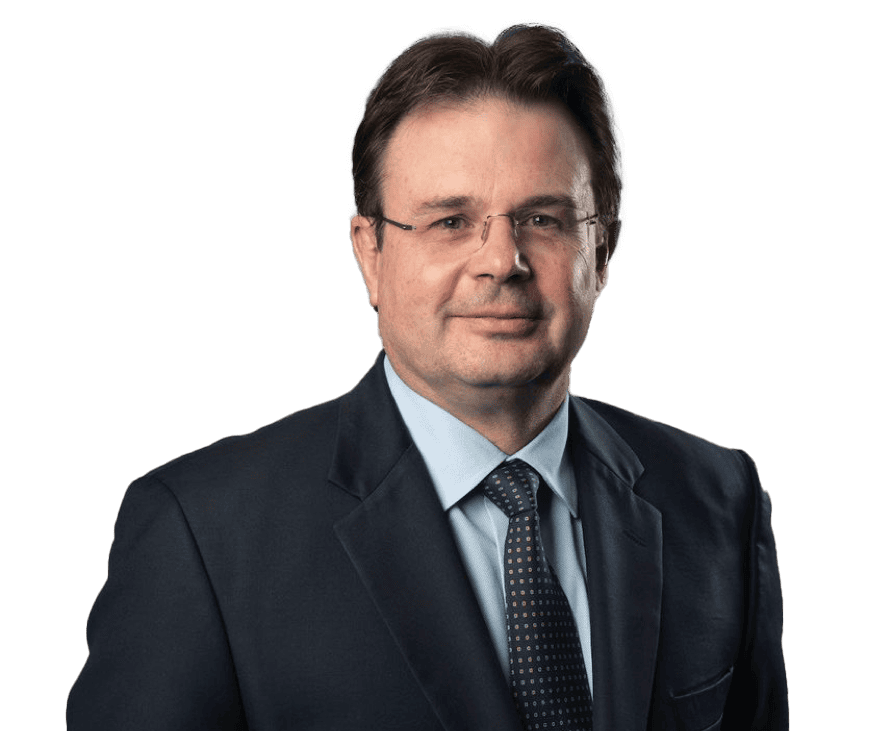
South Africa’s corporate sector sits on a mountain of cash. Yet, despite robust balance sheets, relatively low debt levels and global investment opportunities, many of the country’s biggest businesses are standing still. For Kevin Lings, chief economist at STANLIB Asset Management, this conservative financial posture is both a strength and a symptom of something deeper – a hesitancy that has shaped corporate culture over decades. However, unlocking corporate investment is vital for South Africa’s economic growth, driving jobs, innovation, and competitiveness.
“I think it’s an important topic. There’s this view that corporations are hoarding cash, being overly cautious and not investing in growth. But the reasons behind it are complex. Each business is unique and their cashflow aligns with their cash objectives, but it also makes sense for businesses to maximise their returns. We have to look beneath the surface,” he says.
Kevin is careful to make distinctions and says that when it comes to corporations, it’s important to separate the financial sector, banks, insurers and asset managers from the rest: miners, manufacturers, telecom companies, food producers. Their balance sheets, risk profiles and incentives differ significantly.
What unites them, however, is a conservative approach to money management, one that has become entrenched in South Africa’s corporate DNA.
Why South African Corporates Prioritise Cash Over Investment
Within most large corporations, Kevin explains, the treasury function is central to how financial decisions are made. “Big corporations have a CFO, a treasury team, and people responsible not just for accounting but for managing the company’s financial requirements. Much of that comes down to cash flow, managing money coming in and money going out, keeping reserves for imports, salaries and unforeseen expenses.”
The idea of “just in case” money is deeply embedded and he says the CFO wants to know that if something unexpected happens, they can respond immediately. They don’t want to be at the mercy of a bank’s bureaucracy, waiting for credit approval. They want to have cash ready.
That instinct has made South African corporations among the most financially conservative in the world. “Our corporate debt is about 31 percent of GDP,” Kevin notes. “If you strip out state-owned enterprises like Transnet, Eskom and Denel, it drops to around 20 percent. That’s extremely low, near the bottom among emerging markets,” he says.
By contrast, in many developing and developed economies, corporations carry far higher levels of debt and invest more aggressively in growth and innovation. “In South Africa, the growth in corporate cash holdings has far outpaced inflation for years. That tells you something about behaviour, it’s not just about the amount of cash, but how quickly it’s accumulating in an economy growing at one percent.”
According to Kevin, one reason for this caution is cultural, a by-product of who runs corporate South Africa. He says a lot of South African companies are run by accountants and even when dealing with industrial firms or manufacturers, one will find that the CEO used to be a CFO or comes from a finance background.
“Their focus is on financial soundness, ensuring the balance sheet is strong and the business looks good to shareholders,” he says.
That focus has undeniable benefits: low leverage, stable earnings and well-managed risk. But it also has consequences. “If you’re an accountant by training, your strength is financial management. While your balance sheet may look great, it’s important to consider whether there is a pipeline of new ideas as well.”
It’s a pattern Kevin has seen reinforced time and again. “When I ask South African companies about their research and development (R&D) departments, many don’t have one. If you ask who’s responsible for design or innovation, there’s often no clear answer.”
In countries like Denmark or Norway, Kevin points out, every major business has a design or R&D department tasked with developing new products and staying ahead of the curve. “Here, we don’t prioritise that. So, as money comes in, we put more of it in the bank – not into new ideas or markets.”
How Covid-19 Revealed South Africa's Corporate Cash Hoarding Mindset
For Kevin, the pandemic offered a revealing glimpse into this mindset and he explains that at the start of Covid-19, corporates already had plenty of cash and low debt. Then he noticed something odd, corporate credit started to rise. So, this inspired him to dig deeper and he discovered they weren’t borrowing to spend; they were borrowing to save. They took credit and placed it on deposit. For Kevin, this was classic South African conservatism at work.
“They didn’t know what Covid-19 would bring, whether banks would close, whether liquidity would dry up. Their instinct was to build an even bigger buffer. That’s not a bad thing; it shows prudence. But it also reveals how deep the cautious mentality runs,” he says.
Beyond conservatism, he argues, there’s a simple economic explanation and that with economic growth stuck near one percent, demand is stagnant. “Businesses have enough machinery, enough people, enough capacity to meet current demand. There’s no incentive to expand if your aeroplanes aren’t full, so to speak.”
He gives the example of an airline, saying if every flight is full, one eventually buys another plane. But if one’s planes are only 70 percent full, one doesn’t need to place new orders, and the same applies to South African businesses, they don’t see the need.
However, infrastructure bottlenecks exacerbate the issue.
“Take manganese mining. Producers can only export as much as Transnet’s rail line can carry. Even if they invest in new equipment and mine more, they can’t get it to the port. So they wait. If the government expands capacity, then they’ll invest. Until then, it’s pointless,” he says.
Why South Africa Lacks the Risk-Taking Entrepreneurs Needed for Growth
The third piece of the puzzle, Kevin says, is the absence of what he calls “mavericks”, bold, risk-taking entrepreneurs who spot opportunity in chaos.
“Elon Musk is a maverick. Richard Branson is a maverick. Sol Kerzner, who built Sun City in the middle of nowhere, was a maverick. These are people who take risks, see opportunities others miss, and go for it,” he says.
South African business leaders are highly skilled, diligent and deeply knowledgeable about regulation, tax, and compliance, but they may not be wired to make the big bets that change industries. And yet, he acknowledges, the context matters.
“When you don’t know if you’ll have electricity, water, or social stability tomorrow, risk-taking becomes harder to justify. Many CFOs tell me they’re simply trying to stay in business. I understand that. But even within that reality, there’s room to be more creative, more entrepreneurial.”
So, what does the “typical” South African CFO look like through this lens? He says they are highly qualified, technically excellent and deeply conservative, and they know tax law, company law and regulation inside out.
“They manage complexity beautifully and ensure their businesses stay compliant and financially stable,” he says.
For Kevin, the absence of dedicated R&D or innovation functions in many companies is telling. “If your head of design or technology isn’t coming to you with new ideas, you’ll never use that cash on hand productively. You’ll just keep saving it.”
Where investment is happening
There are, however, pockets of optimism. He says South African corporates that use some of their balance sheets in renewable energy and solar and wind projects have attracted private capital because there’s a clear need and a clear return. He adds that companies have invested in their own electricity generation and, in some cases, are selling power to others.
Similar developments are emerging around water, and for him, there’s growing interest in water infrastructure and management. Businesses are learning from global examples and starting to look for local applications. It’s still early, but it’s coming. Warehousing and logistics have also been growth areas, driven by e-commerce.
“Online retail has increased demand for distribution hubs and storage facilities. We’ve seen private capital flow into logistics infrastructure.”
Still, he cautions, these are exceptions rather than the rule. “It’s not enough to shift the overall trajectory of the economy. To really move the needle, we need systemic change.”
That change, he believes, lies in partnership – particularly between government and the private sector. “It’s clear that the government doesn’t have the funds to rebuild infrastructure on its own. The private sector, on the other hand, has strong balance sheets and the capital to invest.”
Private-public partnerships, already taking shape in energy, logistics, and rail, are the way forward. “We’re starting to see private operators being allocated rail slots, private involvement in ports and investment in renewable generation. Over time, that could extend to water and sanitation. These partnerships are what will unlock the corporate balance sheet.”
“If companies see that electricity, water and transport are getting better, they’ll feel more confident to invest. But it won’t happen overnight.”
Changing the mindset
In the end, Kevin says, waiting for the government to fix everything is not a strategy, adding that companies can fall into a trap of waiting, waiting for policies, waiting for certainty. That
can take forever. More and more, companies are realising they have to take matters into their own hands.
He points to Sun International as an example saying they were struggling with unreliable electricity and water at their hotels. Instead of waiting, they invested heavily in self-generation and water storage.
“It was expensive and risky, but now they’re far better positioned. Sometimes you just have to get on with it,” he says. That shift, from waiting to acting, could be the key to unlocking South Africa’s next phase of corporate growth. “Lift your head.
Look around. Go to international trade fairs. Talk to peers in other emerging markets. Learn how they’ve innovated under similar pressures. There are always lessons out there if you’re willing to look.”
For all the enthusiasm to encourage investment to drive economic growth, he is quick to stress that South Africa’s corporate conservatism is not inherently bad. “You wouldn’t want the opposite, weak balance sheets and failing companies. Our corporations are strong, financially disciplined and well-managed. That’s a foundation to build on.”
“These balance sheets are powerful. If they start to move, if that capital is mobilised, it can change this country. But to do that, we need a mindset shift. From caution to creativity. From waiting to acting. From managing risk to managing opportunity,” he says.
Q1: Why are South African companies holding record levels of cash?
South African corporates have accumulated cash well above inflation due to a deeply conservative corporate culture, low economic growth (around 1%), infrastructure constraints, and a preference for financial security over expansion. The instinct to hold "just in case" reserves is deeply embedded in how treasury functions operate.
Q2: How does South Africa's corporate debt compare globally?
South Africa's corporate debt sits at around 31% of GDP - dropping to approximately 20% when state-owned enterprises are excluded. This places South Africa near the bottom among emerging markets, reflecting a notably low-leverage corporate environment compared to both developed and developing economies.
Q3: What role does leadership background play in corporate investment decisions?
Many large South African companies are led by executives with accounting or finance backgrounds, including CEOs who previously served as CFOs. This shapes a culture that prioritises balance sheet strength and risk management over R&D, innovation, and growth-oriented investment.
Q4: What impact did Covid-19 have on South African corporate cash behaviour?
Rather than deploying cash during the pandemic, many South African corporates borrowed additional credit — not to spend, but to place on deposit as an added financial buffer. This behaviour highlighted just how deeply ingrained the country's corporate conservatism is.
Q5: Why aren't South African businesses investing despite strong balance sheets?
With GDP growth near 1%, demand is largely stagnant, meaning most businesses have sufficient capacity to meet current needs without expanding. Infrastructure bottlenecks — particularly in rail and ports — further discourage investment, as companies cannot scale output even if they want to.
Q6: Where is private investment actually happening in South Africa?
Notable exceptions include renewable energy (solar and wind), self-generated electricity, water infrastructure, and warehousing and logistics driven by e-commerce growth. These sectors offer clear demand signals and measurable returns, attracting private capital despite the broader cautious environment.
Q7: What is the role of public-private partnerships in unlocking corporate investment?
Kevin Lings argues that the government lacks the funds to rebuild infrastructure alone, while the private sector holds the capital. Partnerships in energy, rail, ports and logistics are beginning to take shape and could extend to water and sanitation — helping build the confidence companies need to invest more broadly.
Q8: What mindset shift is needed to unlock South Africa's corporate growth potential?
The shift required is from financial caution to opportunity-led thinking — moving away from waiting for policy certainty toward proactive investment. Companies like Sun International, which invested in self-generation rather than waiting for government solutions, are cited as examples of this emerging approach.